
15th International Symposium on Concrete Roads: Over 300 experts come together in Málaga to shape the future of resilient infrastructure
10/11/2026
More than 300 participants from 34 countries, over 120 technical contributions and three days of discussions, networking and knowledge exchange: the 15th International Symposium on Concrete Roads brought the international concrete paving community together in Málaga from 3 to 6 November 2026.
Under the theme “Building the Future on Resilient Concrete Pavements”, the symposium was much more than a technical conference. It was an opportunity for researchers, engineers, contractors, public authorities and industry representatives from across five continents to reconnect, exchange experiences, discover new developments and build new connections.
Co-organised by OFICEMEN, IECA, AFCA and EUPAVE, the event combined an extensive technical programme with a commercial exhibition, networking opportunities and technical visits, reflecting the dynamism of a sector that continues to innovate and evolve in response to the challenges facing transport infrastructure.
Bringing the international concrete paving community together
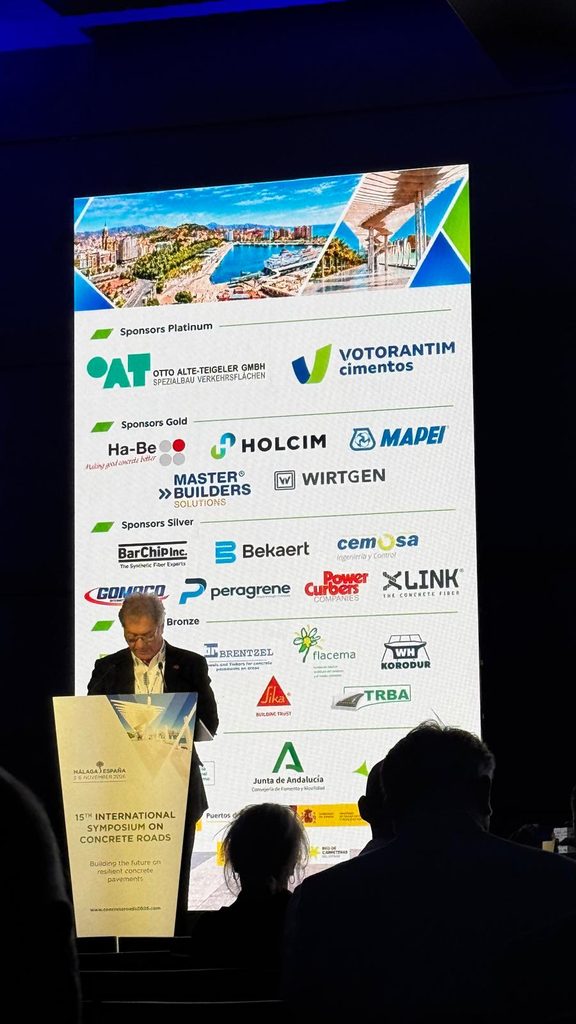
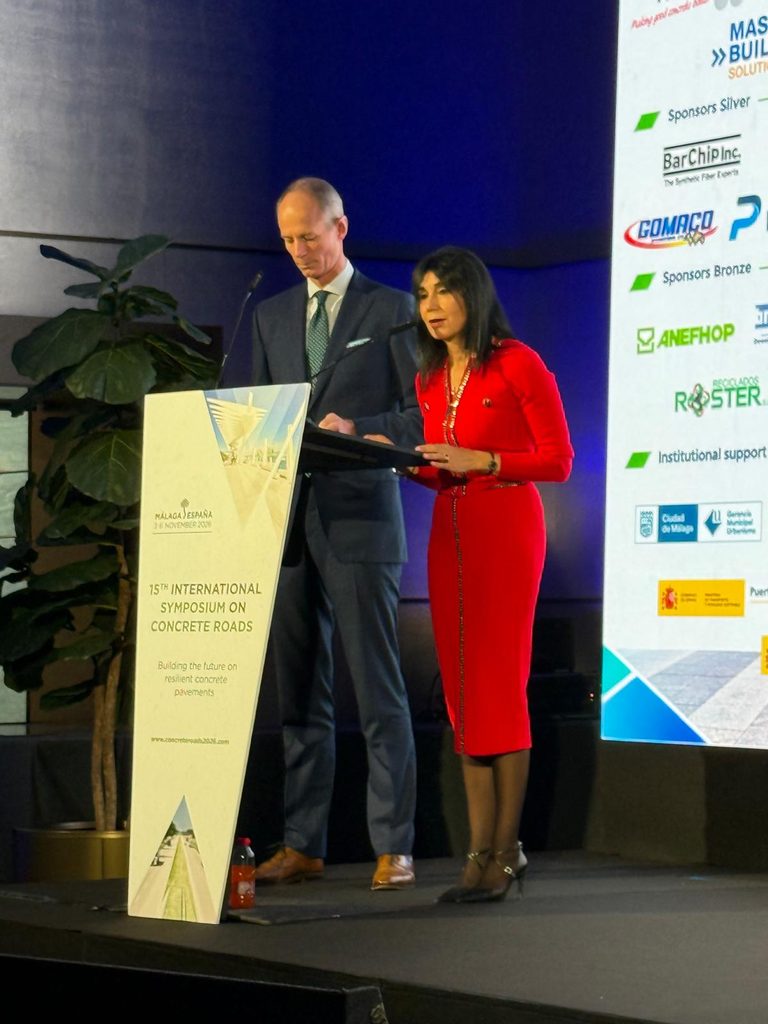
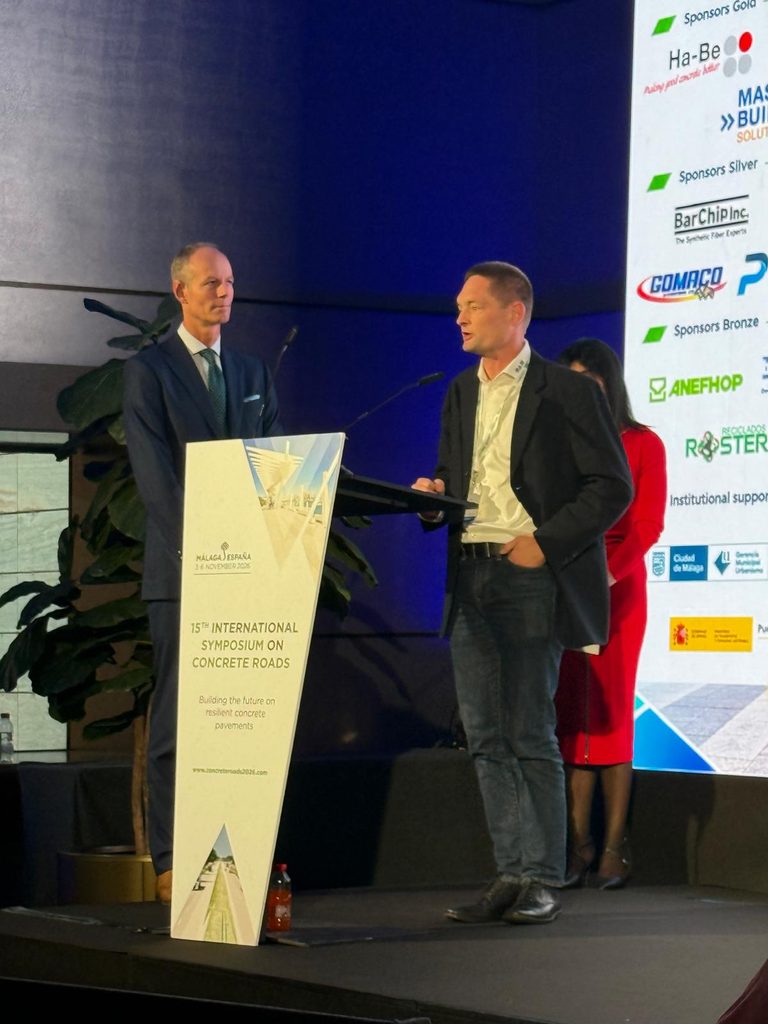
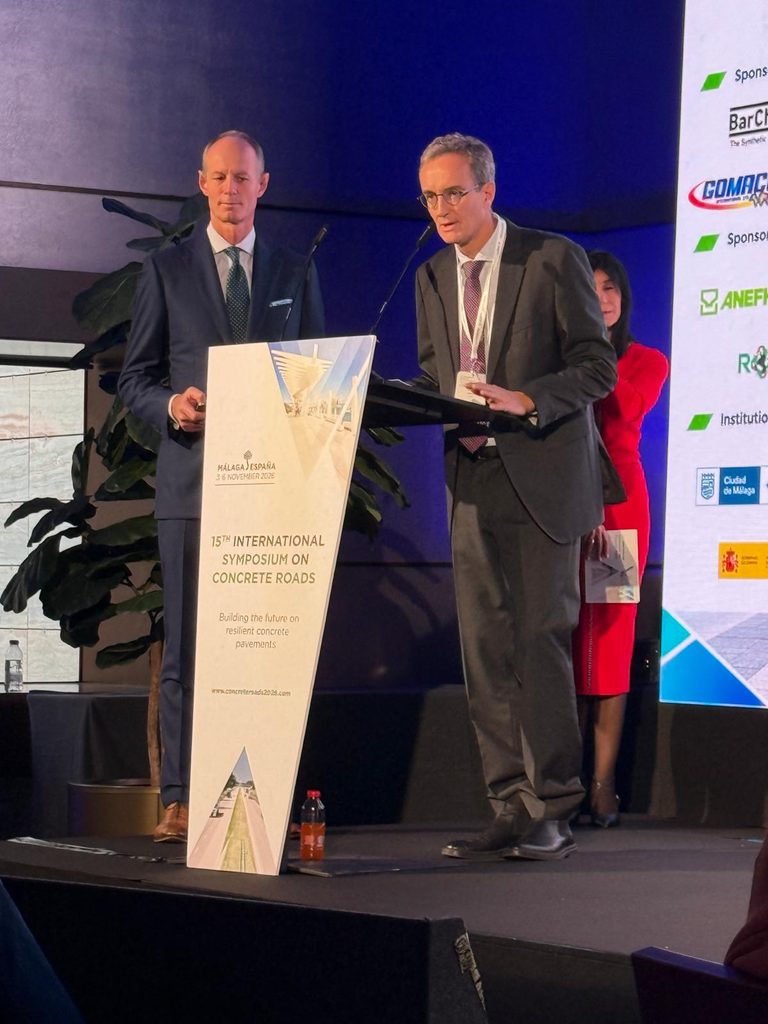
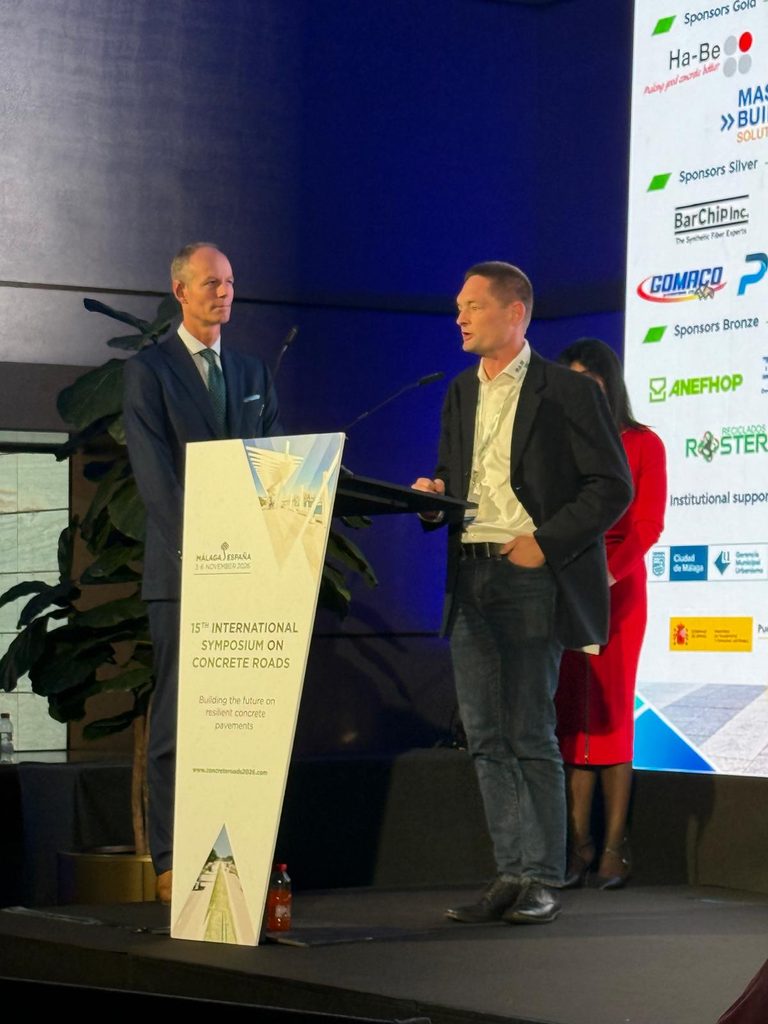
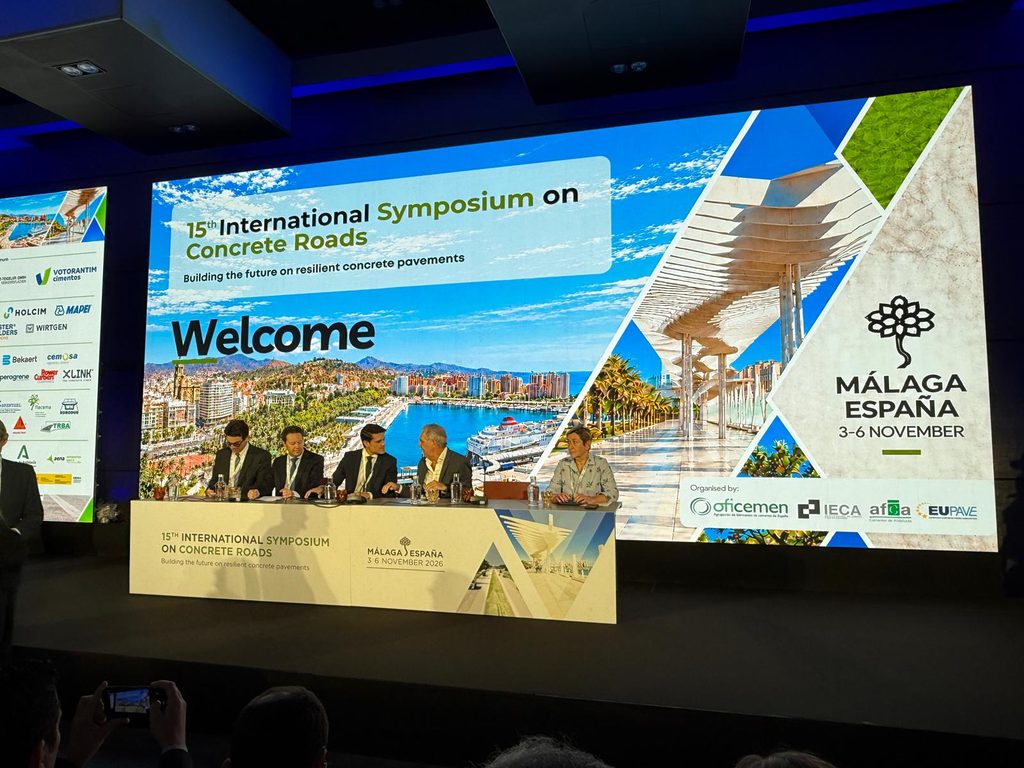
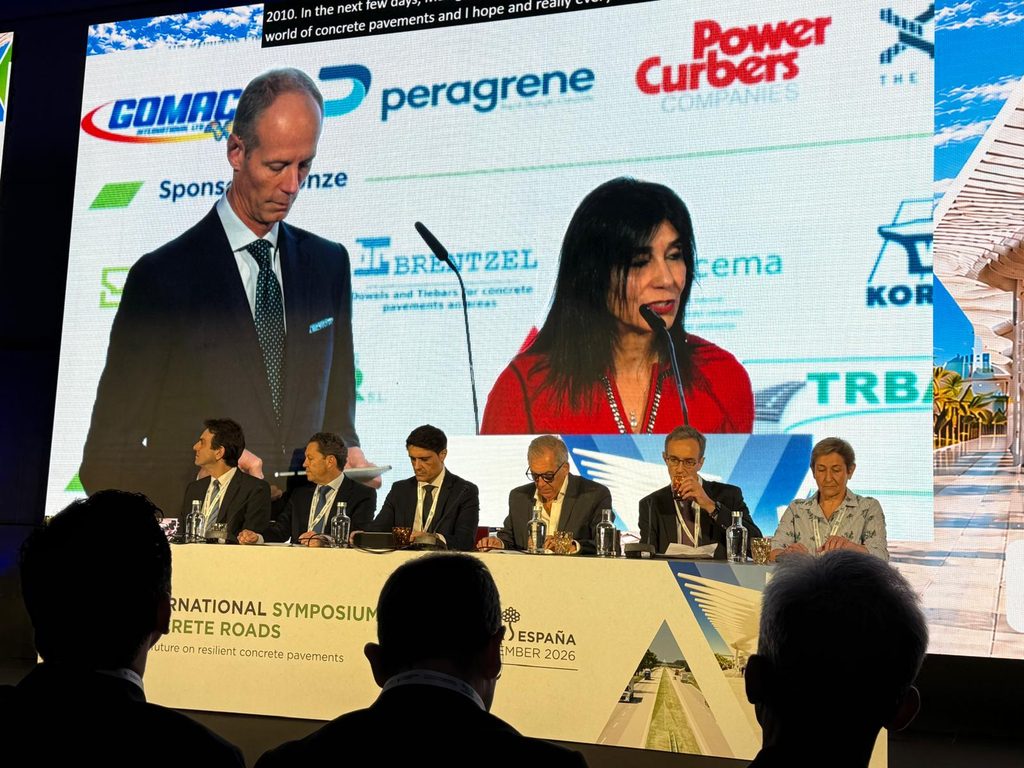
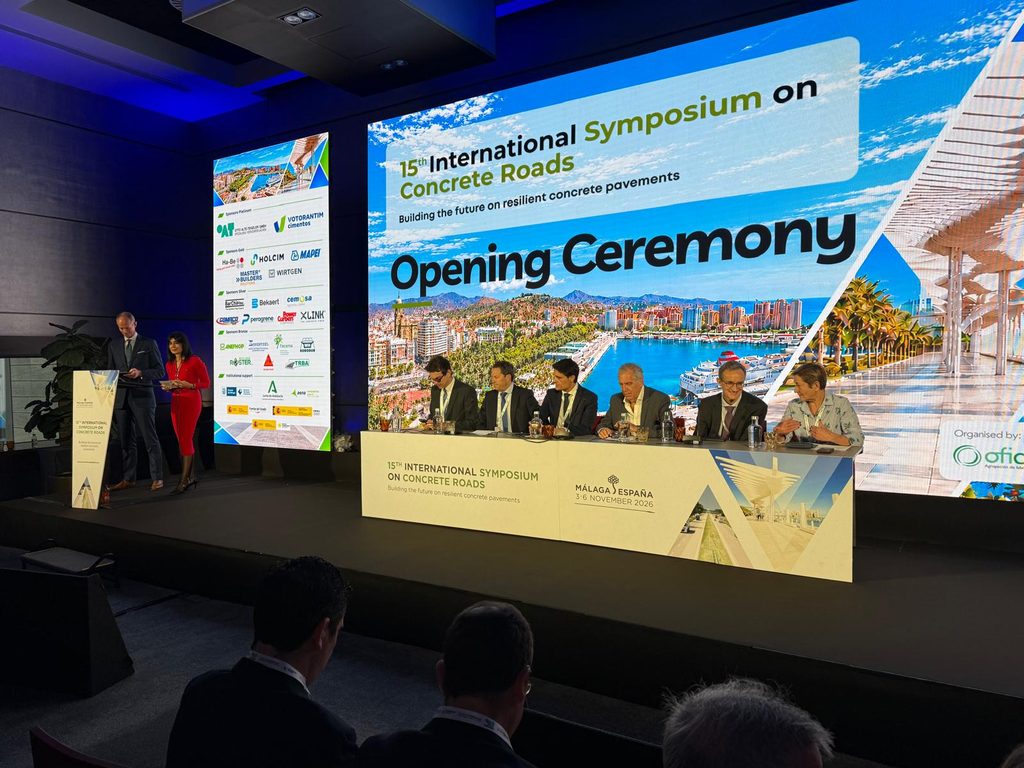
The official opening ceremony, held on 4 November at the Barceló Málaga Hotel, set the tone for three days of exchanges and discussions. Representatives of national and international organisations, industry leaders and public authorities gathered to officially launch the symposium and highlight the importance of working together to address the challenges facing transport infrastructure.
Moderated by Elena Guede Vázquez, Director General of OFICEMEN and IECA, and Hervé Camerlynck, Managing Director of EUPAVE, the ceremony featured contributions from Tim Alte-Teigeler (Otto Alte-Teigeler GmbH), Eduardo Pérez Vila (Votorantim Cimentos España), Dr Anna-Carin Brink (International Society for Concrete Pavements), Miguel Caso Florez (PIARC – World Road Association), Alan Svaiter (AFCA), Stéphane Nicoud (EUPAVE), Ricardo de Pablos (OFICEMEN and IECA), Eduardo D. Gutiérrez García (Government of Andalusia) and José María Morente del Monte (Málaga City Council).
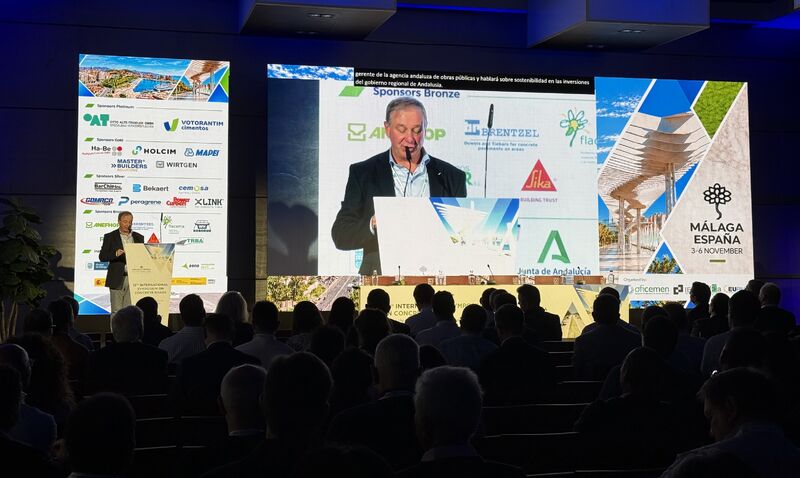
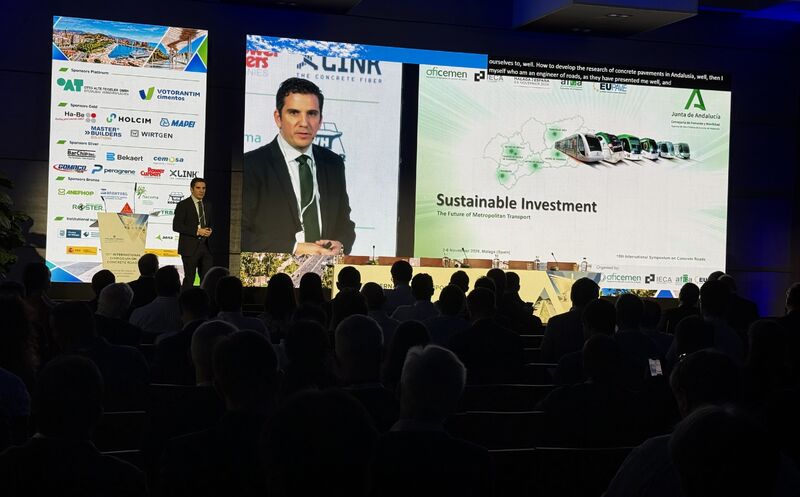
The opening day continued with three keynote presentations addressing some of the major challenges facing transport infrastructure:
- Improving flood resilience: Leif Wathne (National Concrete Pavement Technology Center, CP Tech Center) explored how road pavements can be made more resilient to flooding and extreme weather events.
- Artificial intelligence in pavement engineering: Halil Ceylan (Iowa State University, USA) examined the growing role of AI in the analysis and design of resilient concrete pavements for heavy-duty infrastructure.
- Sustainable public investment: José María Rivera Zafra (Public Works Agency of the Government of Andalusia) addressed the importance of sustainable investment in infrastructure.
Alongside the technical sessions, the commercial exhibition provided another opportunity to discover the latest products, technologies and solutions developed by companies active in the sector. It also served as a lively meeting point where participants could reconnect with long-standing colleagues, exchange experiences over coffee and establish new contacts and potential partnerships.
Exploring the challenges and opportunities of tomorrow
Throughout the symposium, one thing was clear: the concrete paving sector is constantly evolving. From new materials and construction techniques to digital tools and innovative approaches to infrastructure management, the programme reflected an industry actively seeking answers to today’s challenges while preparing for those of tomorrow.
Discussions covered a broad range of topics, including the development of lower-carbon and more recyclable materials, resource reuse and recycling, pavement durability, digitalisation and artificial intelligence in infrastructure design and management, as well as solutions for roads, ports, airports, logistics platforms and industrial areas.
Climate resilience was another central theme. Participants examined how pavements can better withstand extreme weather events, flooding and natural disasters, while highlighting the importance of considering the entire life cycle of infrastructure, from construction and maintenance to environmental impacts and long-term costs.
Beyond the technical content, the variety of perspectives and experiences shared throughout the sessions highlighted the value of bringing together professionals from different countries, backgrounds and areas of expertise. Whether presenting research findings, sharing practical experience or discussing emerging technologies, participants contributed to a collective conversation about how to make transport infrastructure more sustainable, efficient and resilient.
This combination of technical expertise, fresh ideas and international cooperation is what makes events like the International Symposium on Concrete Roads so valuable to the sector.
From technical discussions to real-world applications
The symposium also provided an opportunity to step outside the conference rooms and see concrete pavement solutions in action. On 6 November, participants took part in three technical visits across Málaga, discovering projects that illustrated the diversity of concrete applications and the practical challenges involved in delivering durable infrastructure.
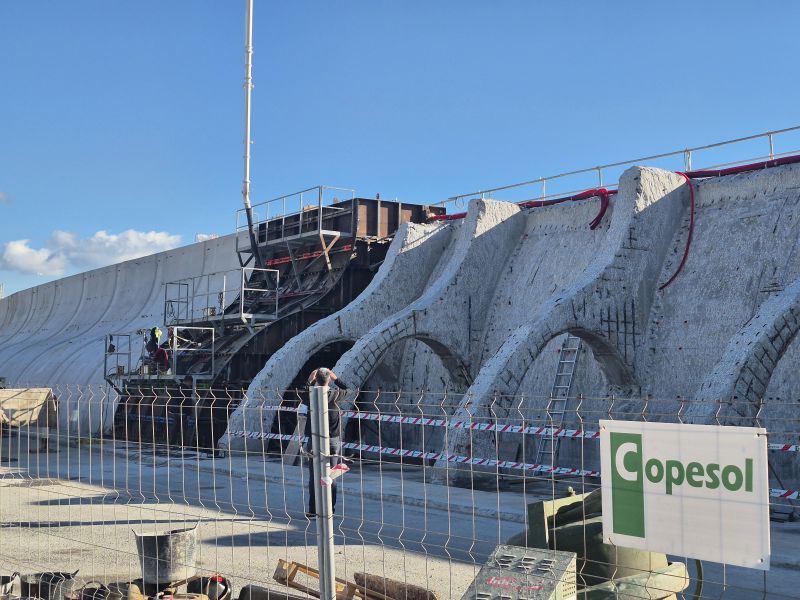
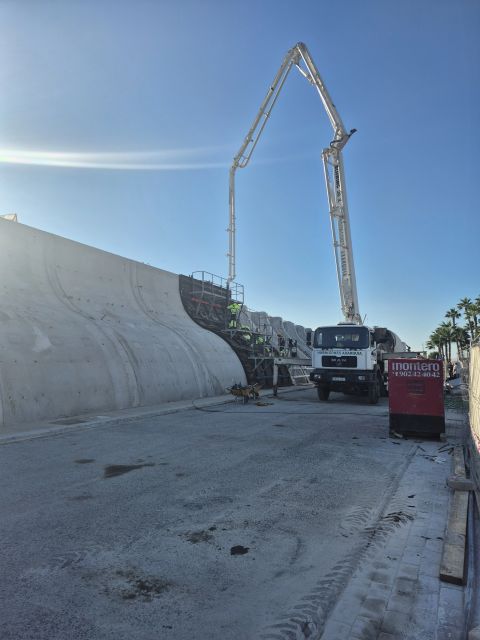
The first visit took place at the Port of Málaga, where participants learned about the structural strengthening works being carried out on the seawall to restore its performance, safety and durability under demanding marine conditions and storm action. The visit also provided insight into the challenges of operating and maintaining pavements exposed to heavy port traffic and loading. The terminal covers 385,081 m², with 723 metres of berth line and a container area of 103,663 m², alongside ro-ro and bulk-handling facilities.
The second visit focused on the Málaga Metro, where participants discovered the concrete slab track solutions used in the network and their role in supporting efficient and durable urban transport infrastructure.
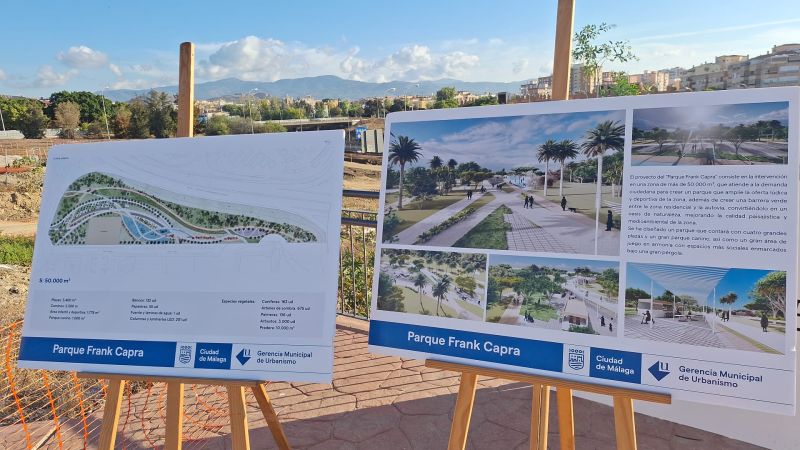
The third visit, dedicated to Urban and Industrial Pavements (Mayoral Building), included two stops: Parque Frank Capra and the Mayoral Logistics Centre.
At Parque Frank Capra, participants discovered the application of i.pro STABEX, an innovative soil-stabilisation solution used to create paths that retain a natural appearance while offering improved resistance to erosion. Representatives of Málaga City Council, Heidelberg Materials, IECA and CEMOSA presented the ongoing works and explained the characteristics of the materials used.
At the Mayoral Logistics Centre, participants explored concrete pavement applications in industrial and logistics environments, highlighting the importance of durable solutions capable of withstanding demanding operational conditions.
Together, these three visits offered a practical perspective on the topics discussed during the symposium, demonstrating how innovation and engineering expertise translate into real-world infrastructure projects.
Recognising the people behind technical excellence
The symposium also provided an opportunity to recognise the people whose expertise, dedication and contributions help move the concrete paving sector forward.
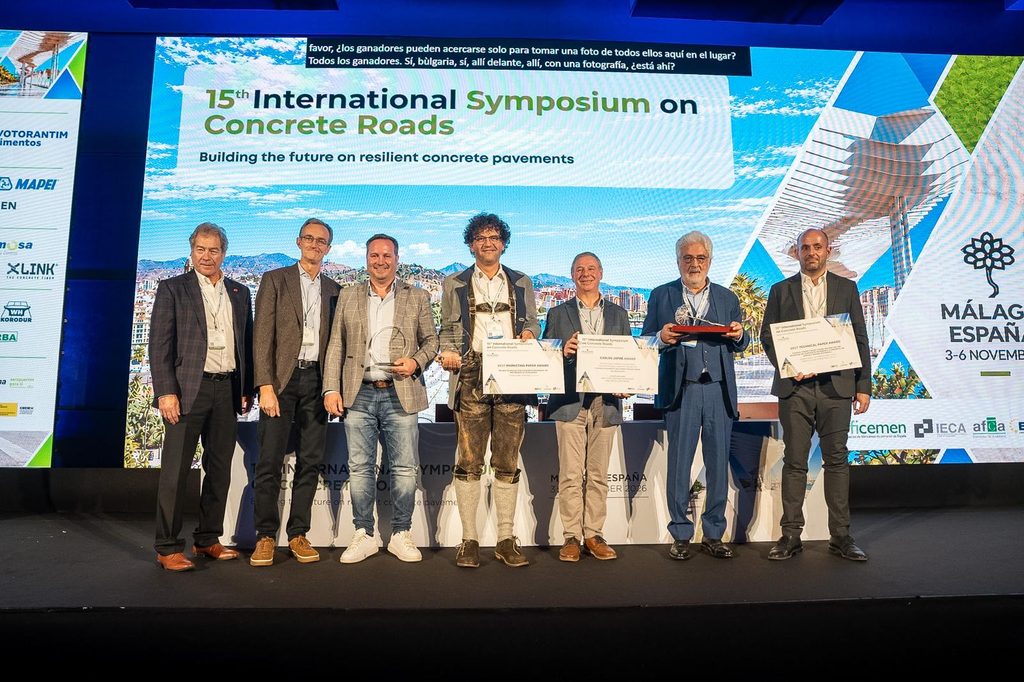
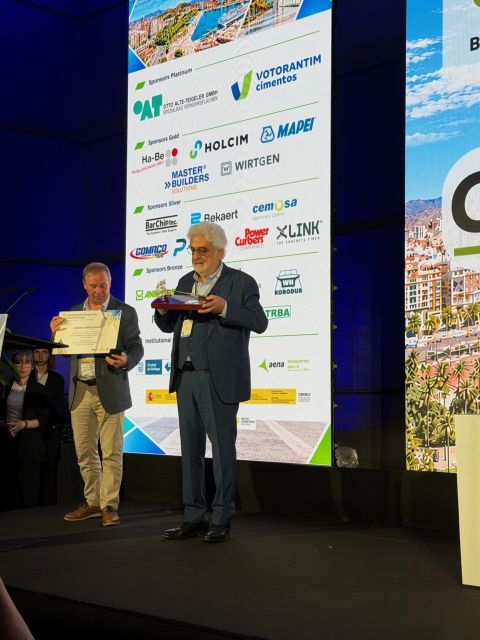
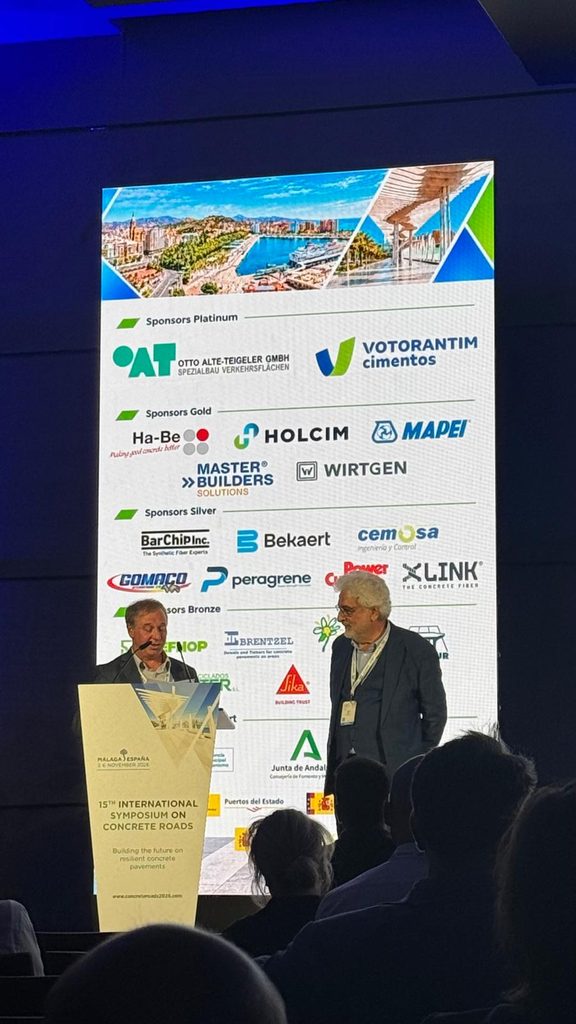
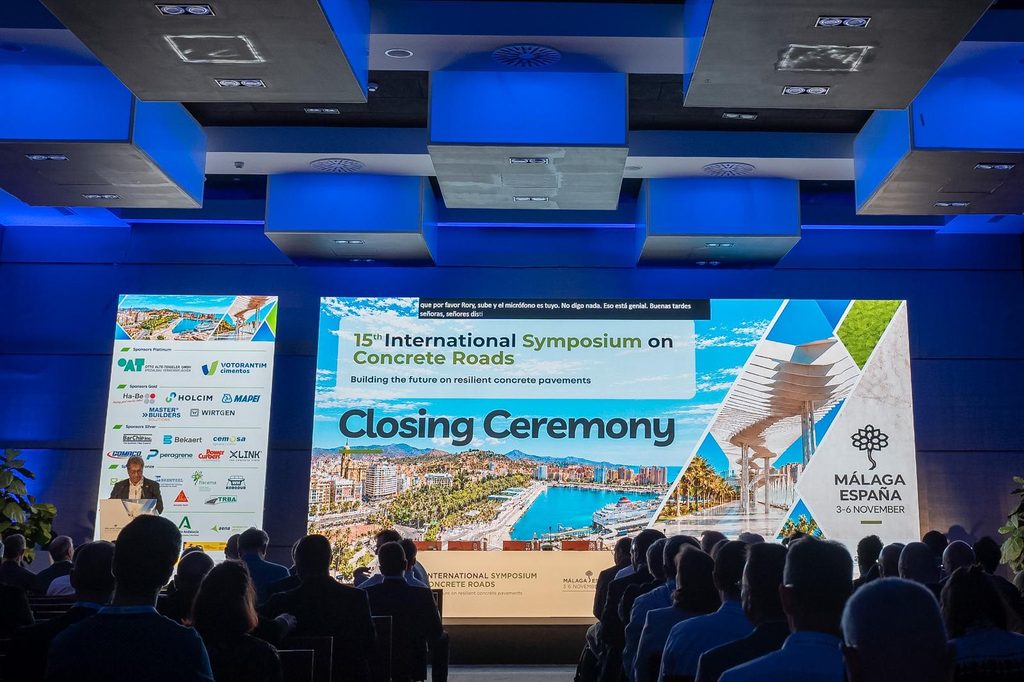
During the closing ceremony at the Barceló Málaga Hotel, three awards were presented to recognise outstanding achievements in the concrete pavement sector:
- Carlos Jofré Lifetime Achievement Award: Joseph Abdo (JA Consulting, France), in recognition of his extensive involvement in major international projects and his contribution to the industry over many years. The award was presented by Luc Rens, Technical Director of EUPAVE.
- Best Technical Paper Award: Joseph Abdo and Cédric Le Gouil (Cimbeton, France), for their paper “France: Twenty-eight years review on the behavior of composites pavements (concrete on asphalt bound material)”. The award was presented by Rory Keogh, Vice-President of EUPAVE.
- Best Marketing Communication Award: Stefan Spalt (ASFINAG), recognised for his work on the “Re-recycling of a concrete pavement of Motorway A1 in Austria”. The award was presented by Stéphane Nicoud, President of EUPAVE.
In his closing remarks, César Bartolomé, Director of Technology and Promotion at IECA, thanked the participants, speakers, technical committees, sponsors and supporting organisations, as well as the Government of Andalusia and Málaga City Council, for their contribution to the success of the event.
The conversations continue
As the 15th International Symposium on Concrete Roads came to an end, participants left Málaga with new insights, fresh perspectives and, undoubtedly, new connections. The event was a reminder that progress in the concrete paving sector is driven not only by technical innovation and research, but also by the people who share their knowledge, challenge existing approaches and work together towards common goals.
EUPAVE would like to warmly thank all co-organisers, speakers, participants, sponsors and partners for their commitment and valuable contribution to making this edition a success.
Three days of knowledge, inspiration and collaboration – and plenty of reasons to keep the conversation going. We look forward to meeting the concrete paving community again at the next edition!
Press releases in Spanish
The Symposium in the media
https://www.malagahoy.es/malaga/malaga-reune-expertos-internacionales-debatir_0_2008427492.html

Copyright © 2026 | EUPAVE | Privacy policy | General term of use ALYS